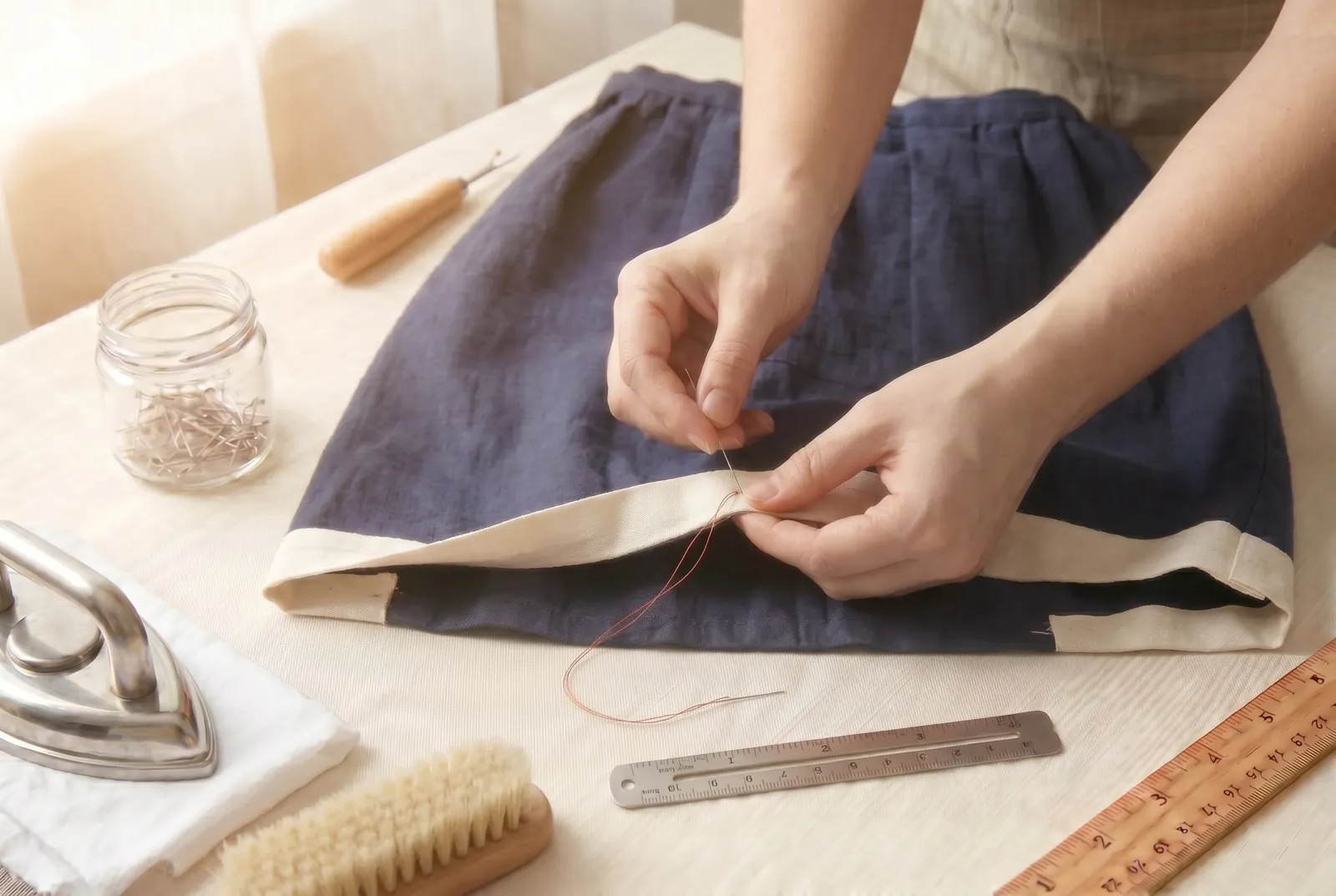
Everyday Mending · piece Nº 16 · 54 min
Let down a skirt hem for extra length
Reclaim the length folded into a skirt's deep hem so a skirt that has grown too short fits again. You will rip out the old hem, press the crease away, mark an even new hemline, and finish the edge — choosing one of three finishes to match how much length you need to recover.
The seam · 9 steps
Step 1
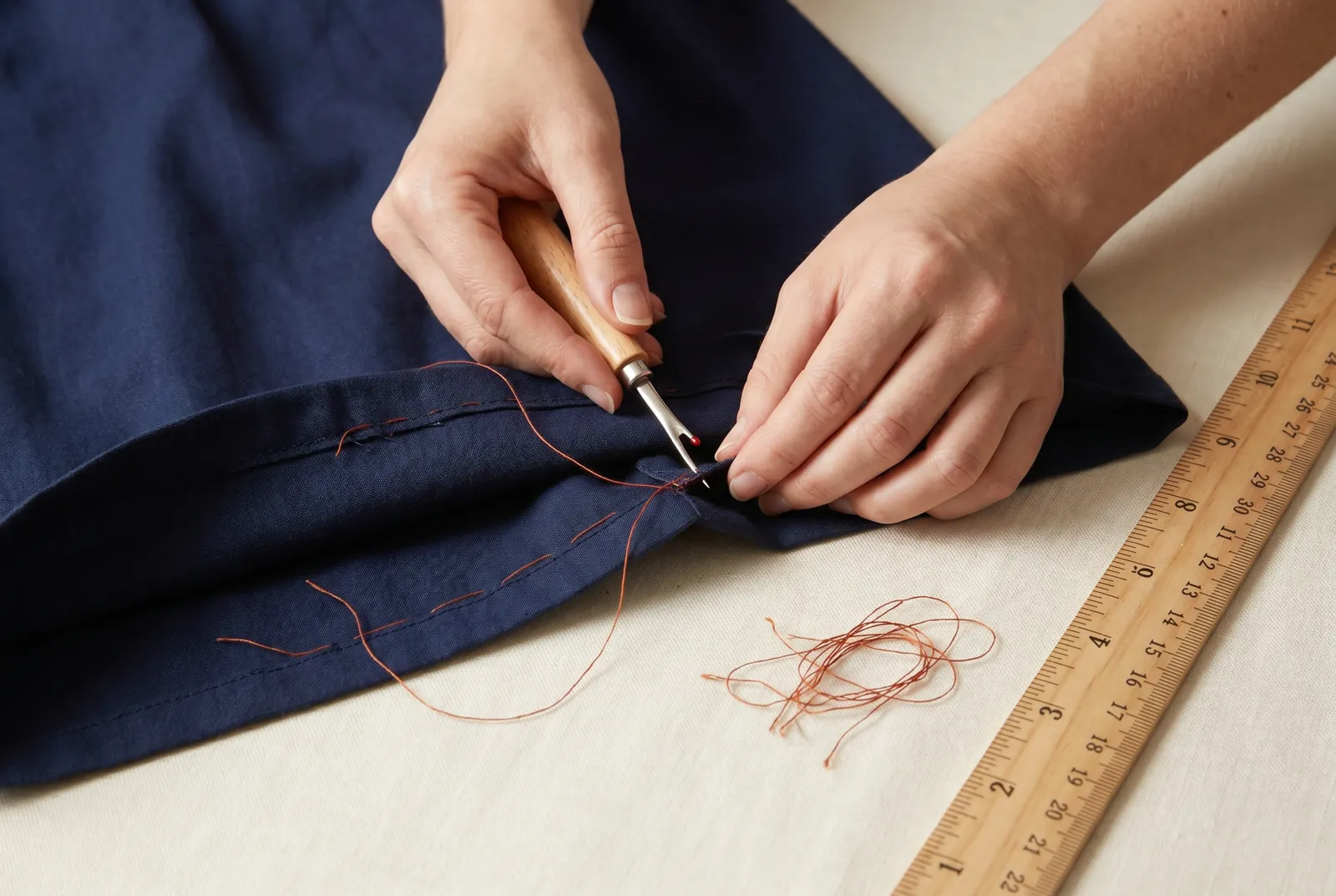
STEP 1/9Turn the skirt inside out and pick out the old hemming stitches with a seam ripper, working under one stitch at a time so you cut thread and not cloth. Open the folded hem all the way so the fabric hangs flat with its full length free.
Step 2
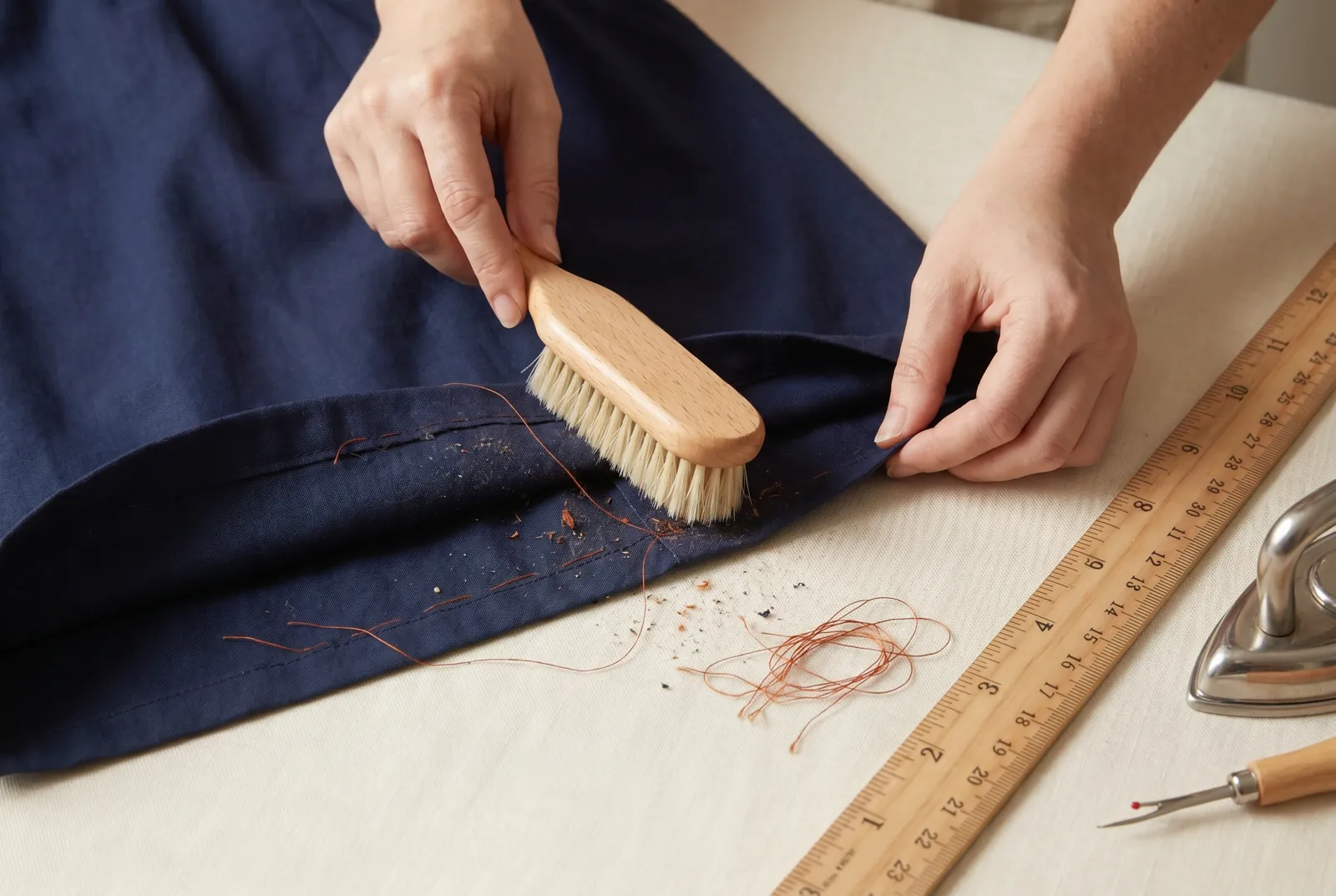
STEP 2/9Brush the dust and lint out of the opened crease with a soft brush or dry cloth. Ground-in dust cuts the threads if you press it back into the fabric, so clear the fold line before the iron goes near it.
Step 3
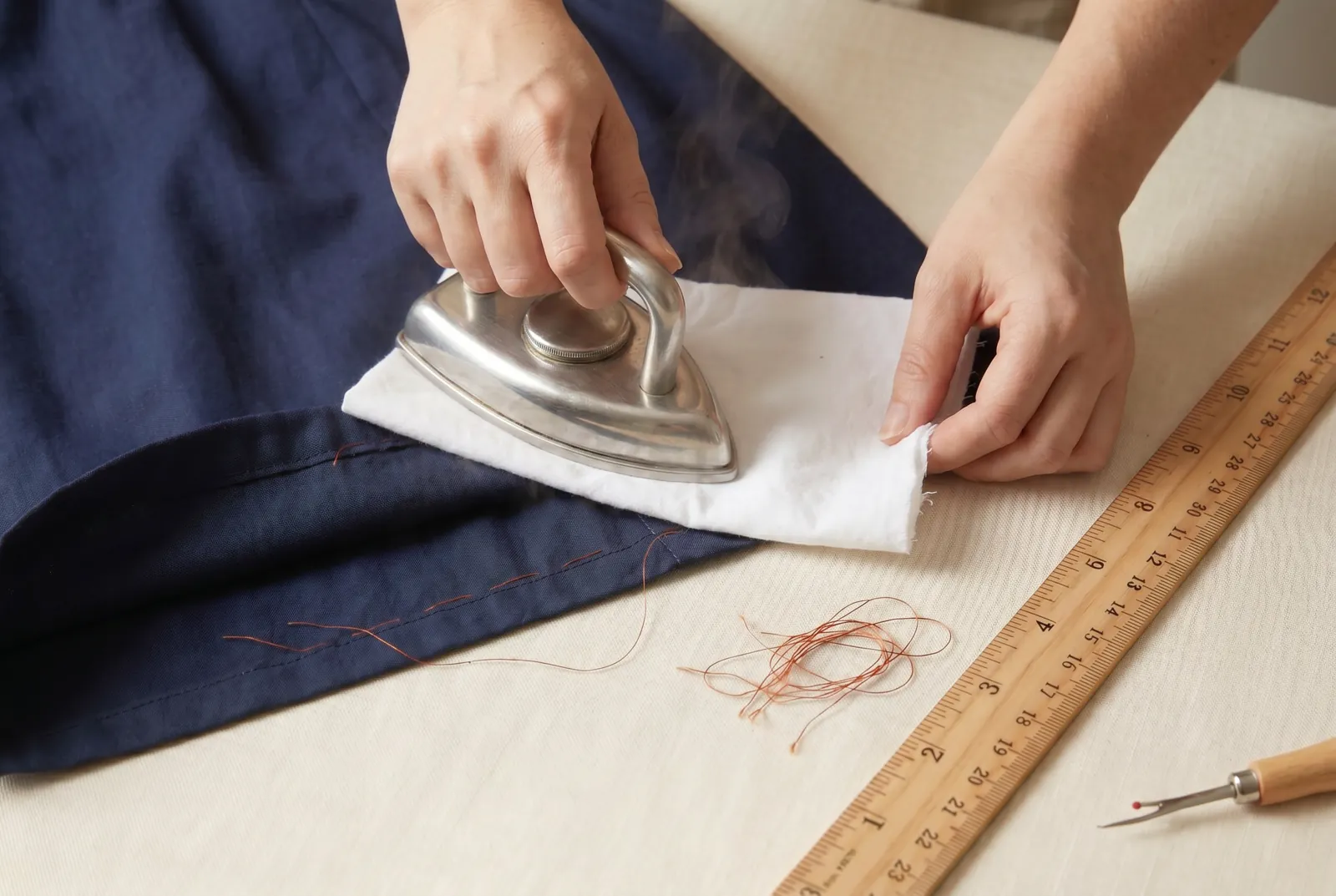
STEP 3/9Lay the damp pressing cloth over the old crease and press on the wrong side until the fold line disappears. A faded or shiny line can take two or three passes with the damp cloth and a hot iron; keep pressing until the crease is gone or clearly faint.
Step 4
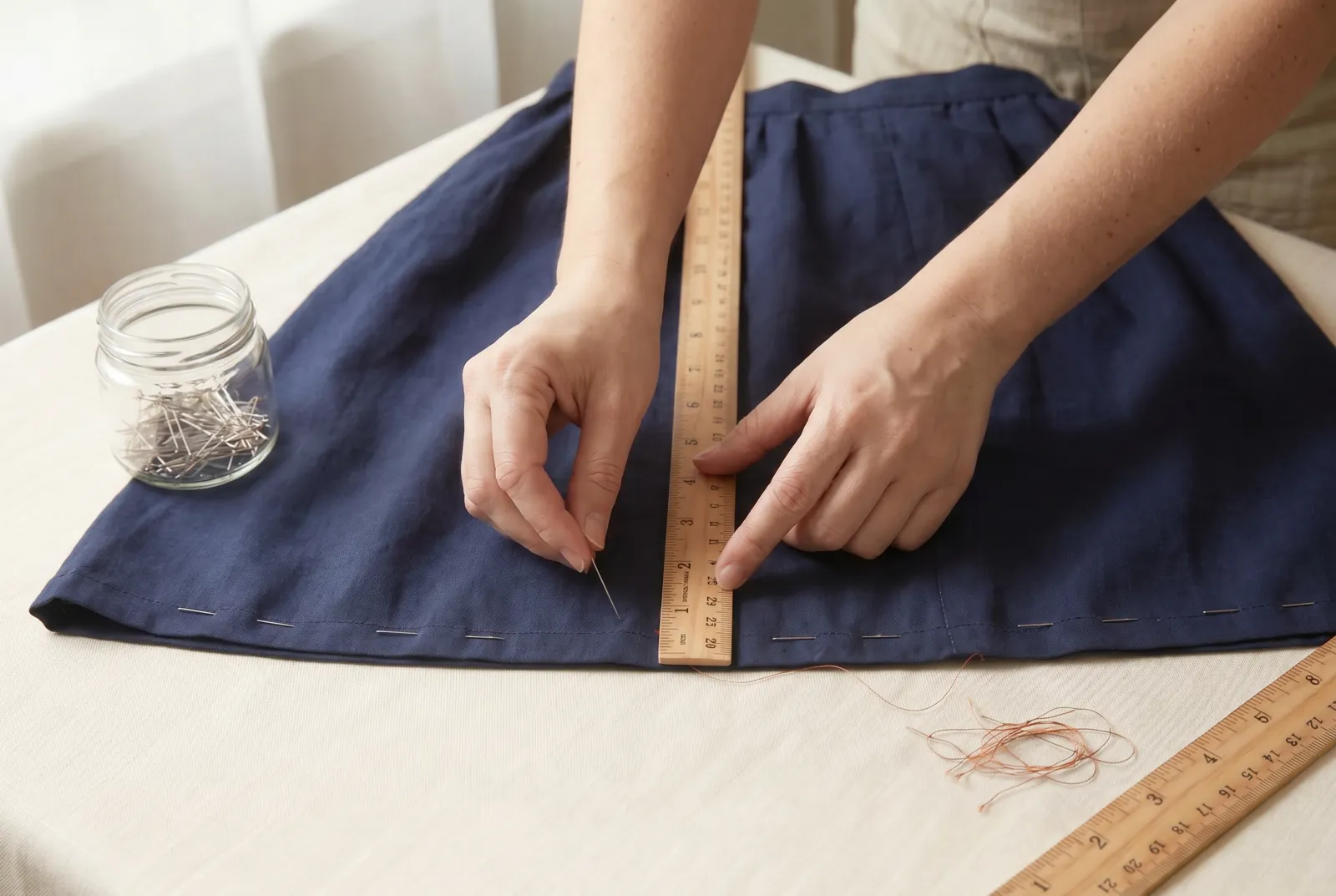
STEP 4/9Put the skirt on, or hang it on a form, and mark the new hemline by measuring up from the floor with a yardstick, setting a pin every few inches all the way around. A skirt edge reads as even only when it is even from the floor, so trust the floor measurement over the old fold line.
Step 5
STEP 5/9Choose ONE finish for the bottom edge — the three options below are alternatives, not steps to do in order. Pick Option A if the crease pressed out and you still have spare cloth below the new hemline, Option B if a worn or faded line still shows, or Option C if you need to keep every last inch of length.
Step 6
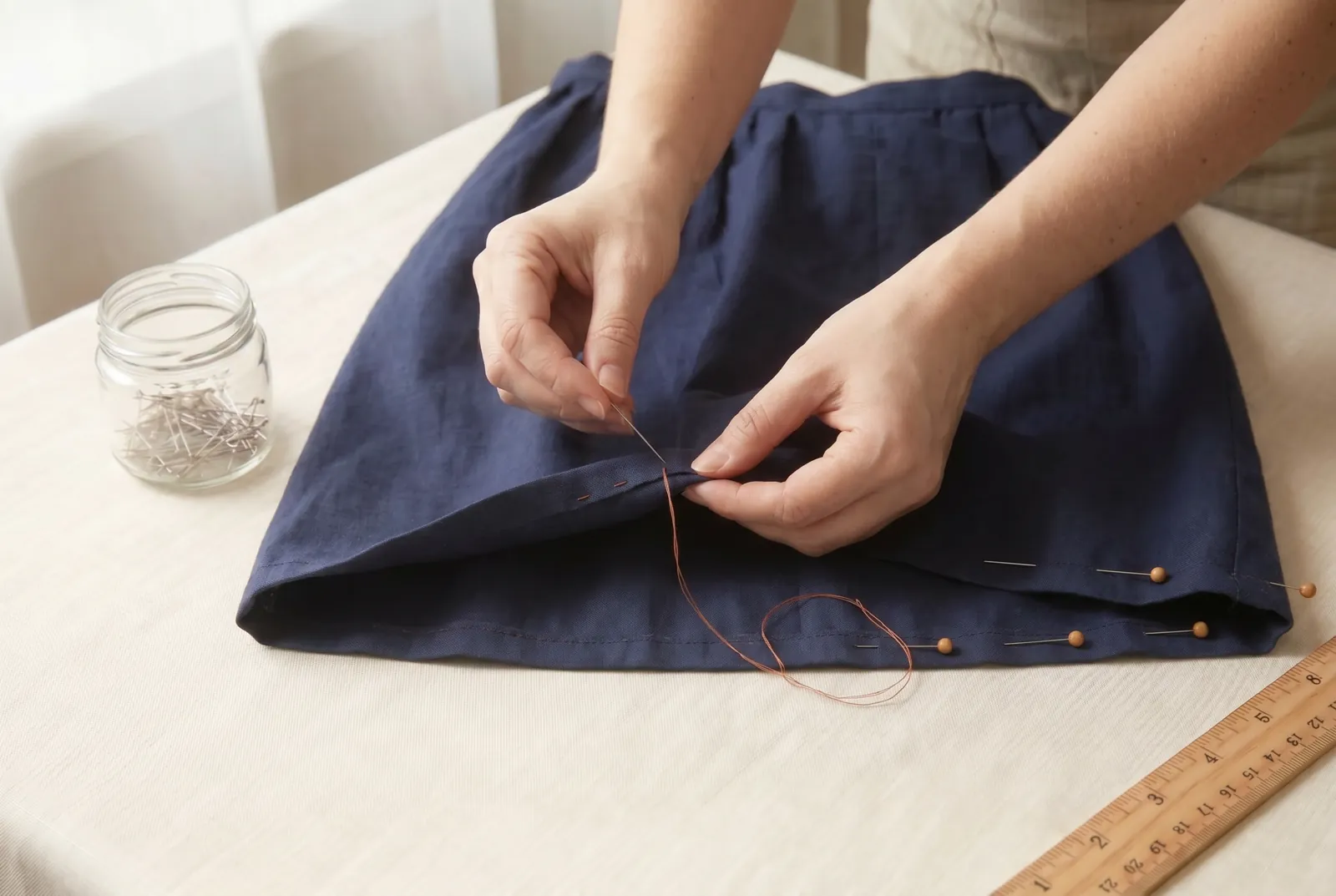
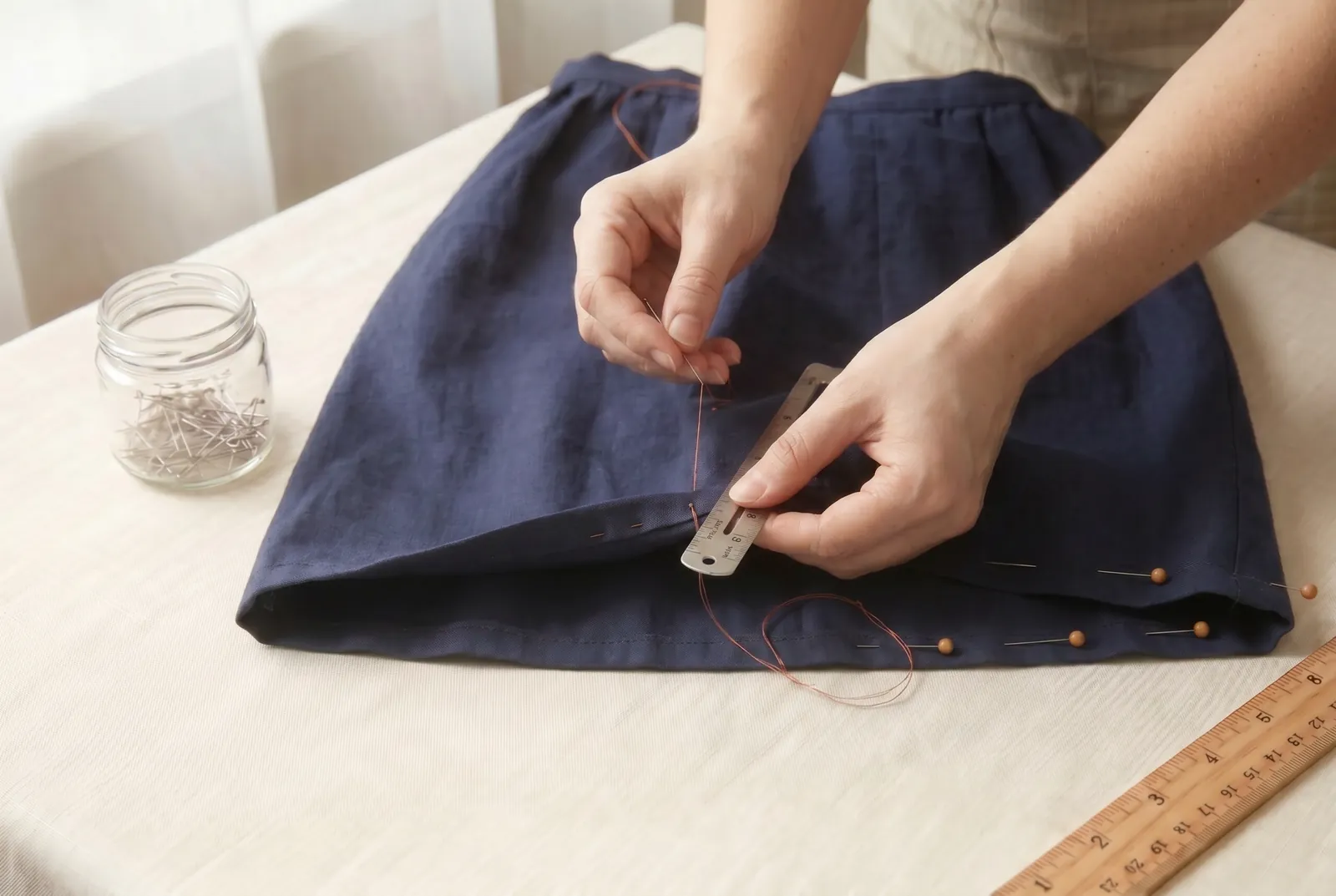
STEP 6/9Finish option A, first part: turn the skirt up to the wrong side along the pinned line, baste close to the new fold, and try the skirt on once more before any sewing — the pins set the length; this fold and check make it real. Then trim the raw edge so the new hem is an even 5 cm (2 in) deep, turn under a 6 mm (1/4 in) first fold measured with a hem gauge, and baste along that fold. Ease any fullness along the upper edge with a small gathering thread so the fold lies flat instead of rippling.
Step 7
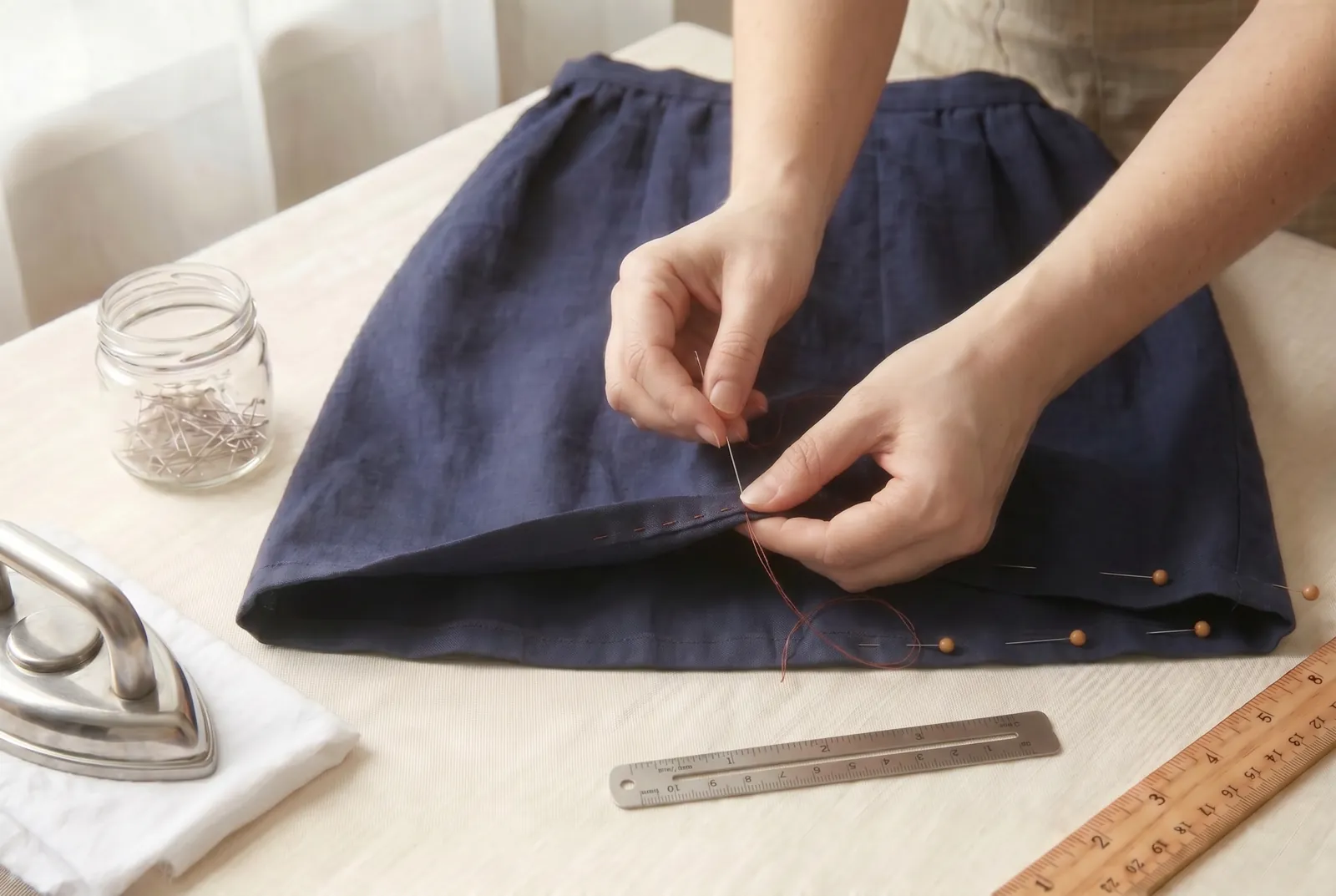
STEP 7/9Finish option A, second part: thread a needle and knot the end (or set up the machine), then hem the basted fold to the skirt. Fasten the thread ends off securely when you finish, and press. Check that the depth is even all the way around before you pull out the basting thread.
Step 8
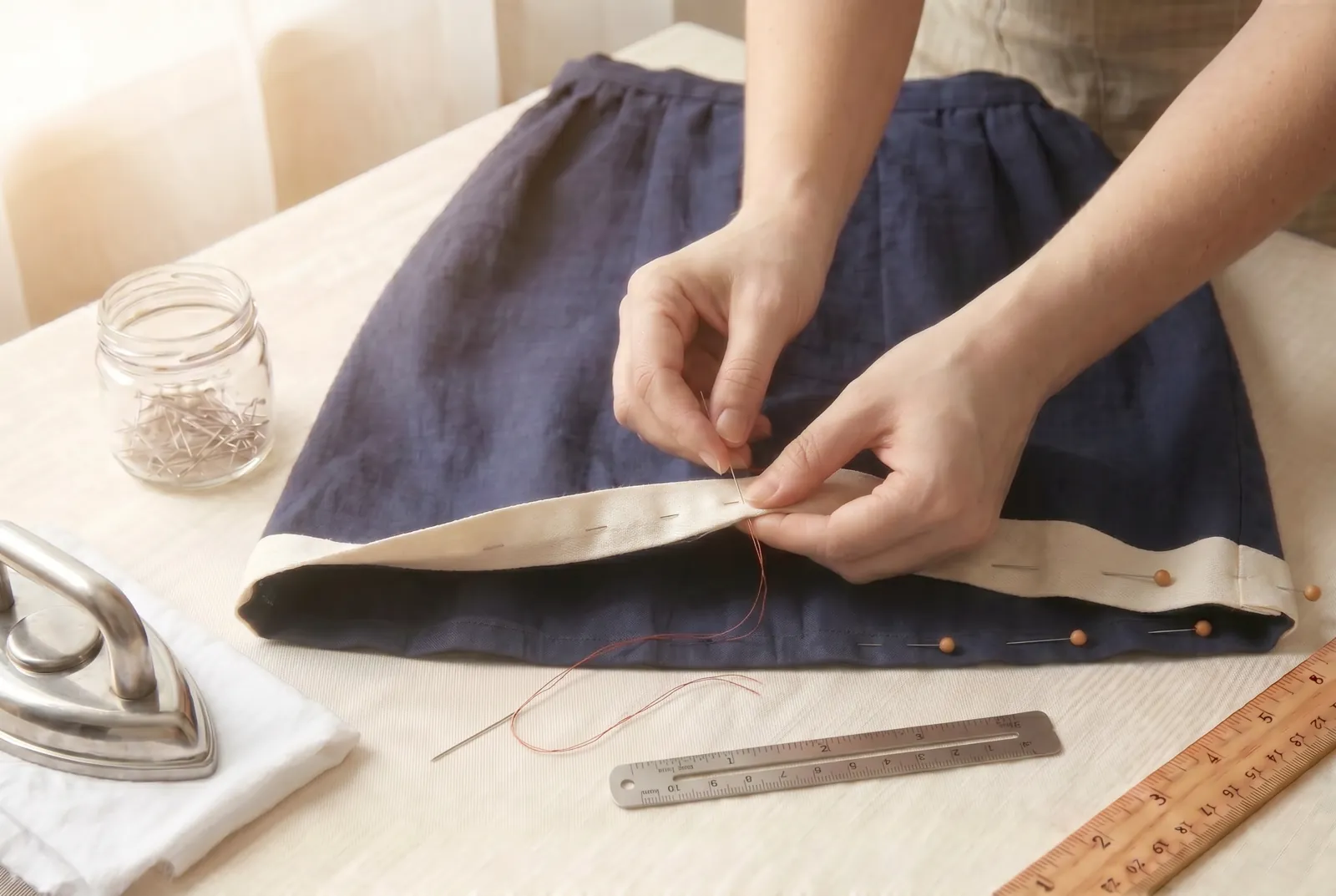
STEP 8/9Finish option B (instead of A): before sewing on any braid, tape, or contrasting band, shrink it first by washing or steaming it — a raw tape sewn on flat puckers the whole hem it was meant to trim. Once the trim is shrunk, cover the old fold line with one or two rows of machine stitching, a band of braid, or a bias fold set on as trimming; a band of contrasting fabric at the bottom both hides the mark and adds length, and reads as intended trimming rather than a repair.
Step 9
STEP 9/9Finish option C, advanced (instead of A or B): to keep every inch of length, do not turn a hem at all — sew a strip of matching fabric to the raw edge, turn it fully to the wrong side, and blind-hem its upper edge so the stitches do not show. Cut that strip on the bias if your hemline is curved, since a bias facing follows a curve where a turned hem cannot. This finish relies on hand blind-hemming and a bias-cut facing, which sit above absolute-beginner work; save it for when you hem confidently by hand, or follow a dedicated faced-hem lesson.