Visible & Decorative Mending · piece Nº 44 · 48 min
Swiss Darning: Rebuild a Worn Knit Sweater
Rebuild a worn wool sweater with Swiss darning (duplicate stitch): retrace the knit loop by loop to double a thin elbow or cuff, and weave a small hole shut so it cannot run further. The mend keeps the stretch of the knit and, worked in matching yarn, is hard to see.
The seam · 8 steps
Step 1
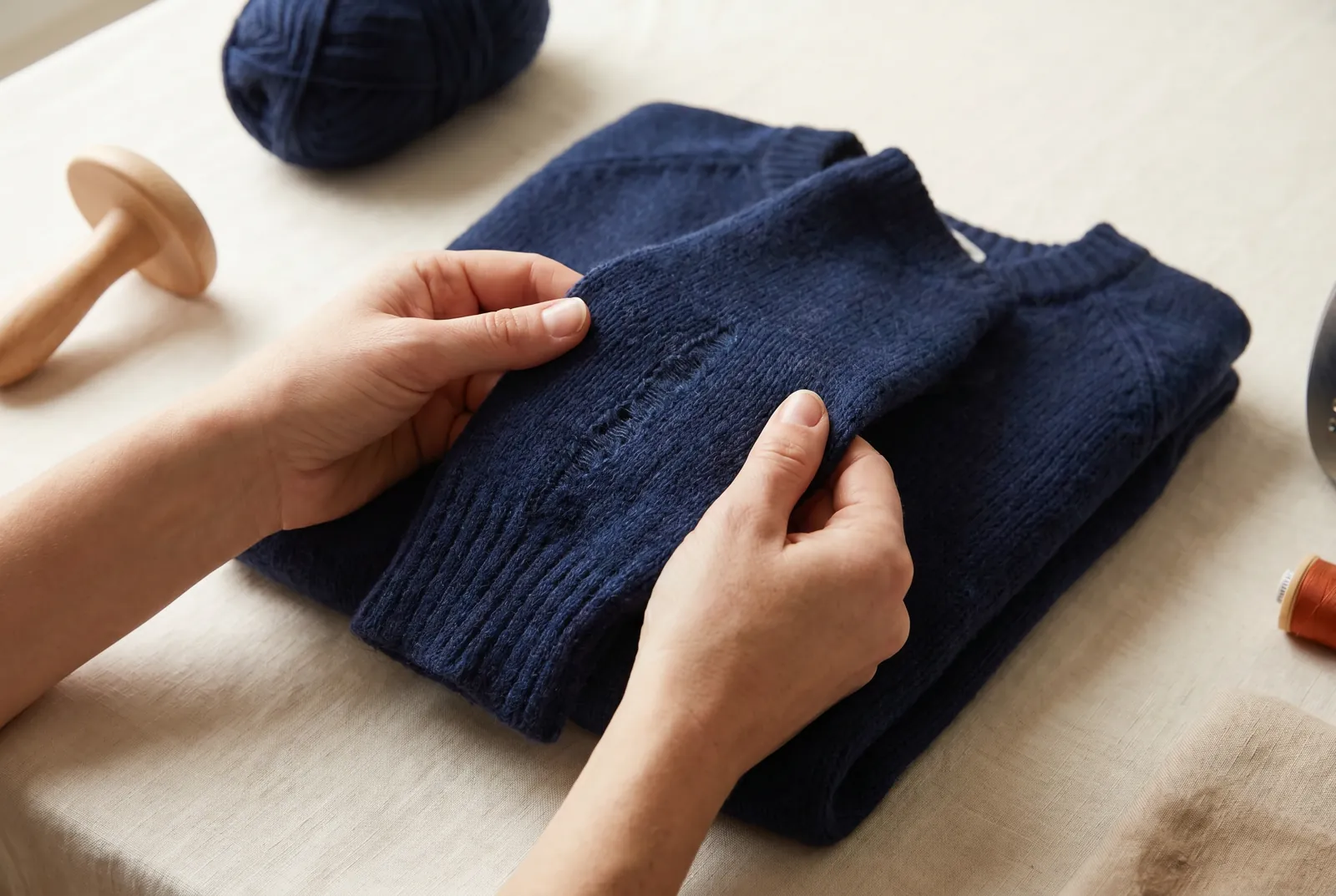
STEP 1/8Look over the sweater for areas worn thin — the elbows, cuffs, and seat go first — and for any small holes. Swiss darning, also called duplicate stitch, retraces the knit loop by loop and strengthens a thin area before it breaks through.
Step 2
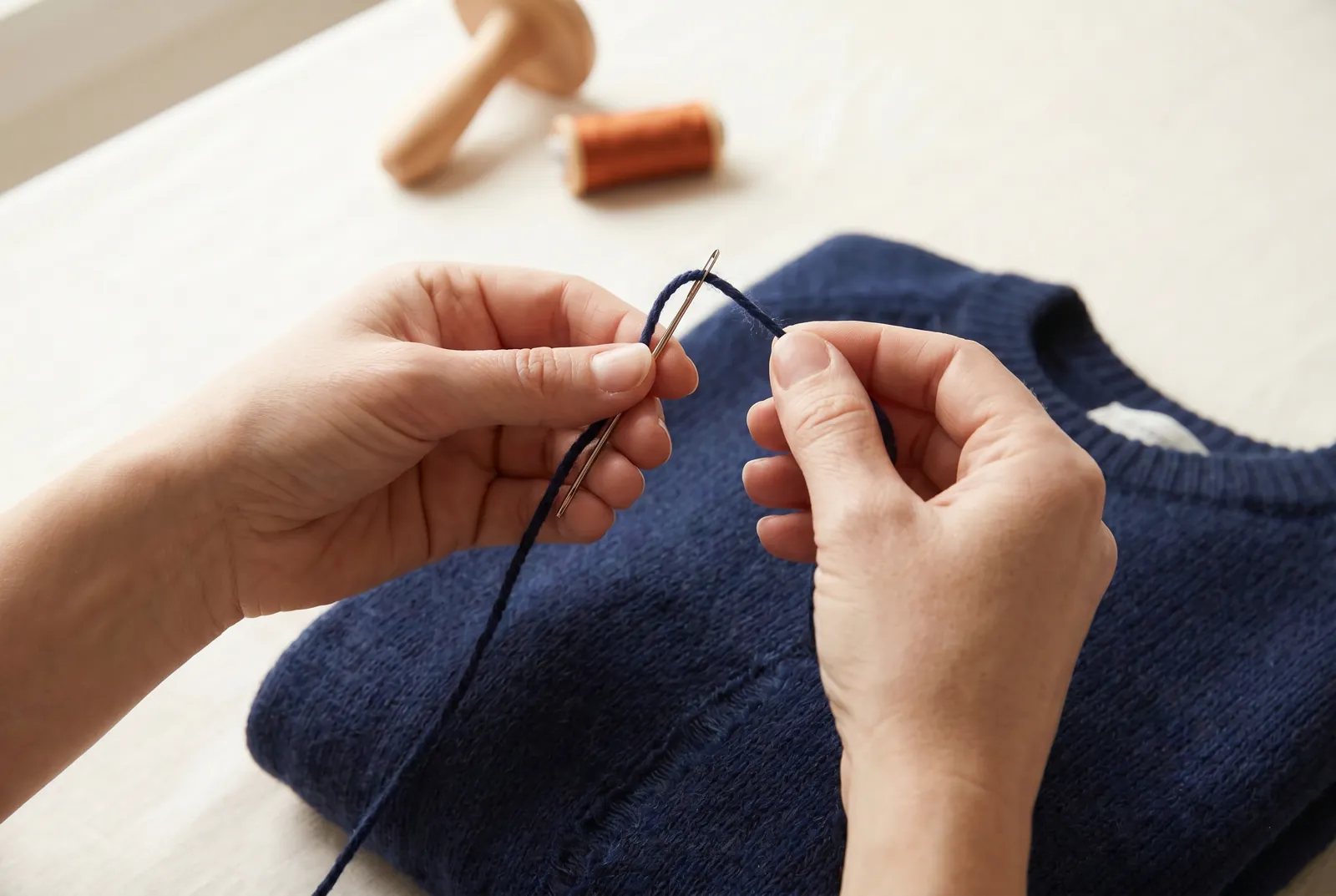
STEP 2/8Choose a soft wool yarn that matches the sweater's color and weight, and thread it on a blunt tapestry needle. The blunt tip slides between the loops instead of splitting the yarn.
Step 3
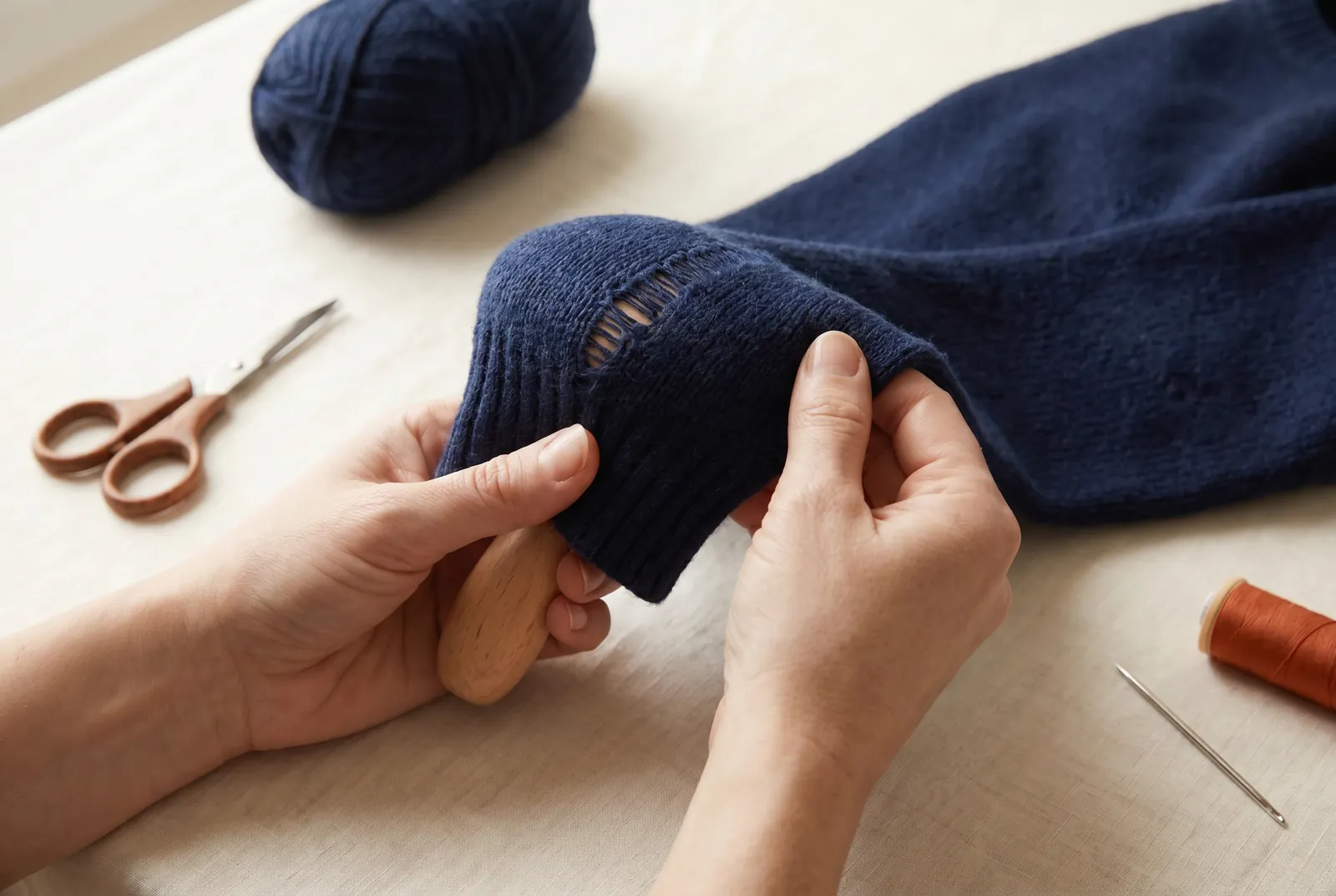
STEP 3/8Slip the darning ball or egg under the worn area so the knit is held curved and slightly taut, its loops open and clear to follow.
Step 4
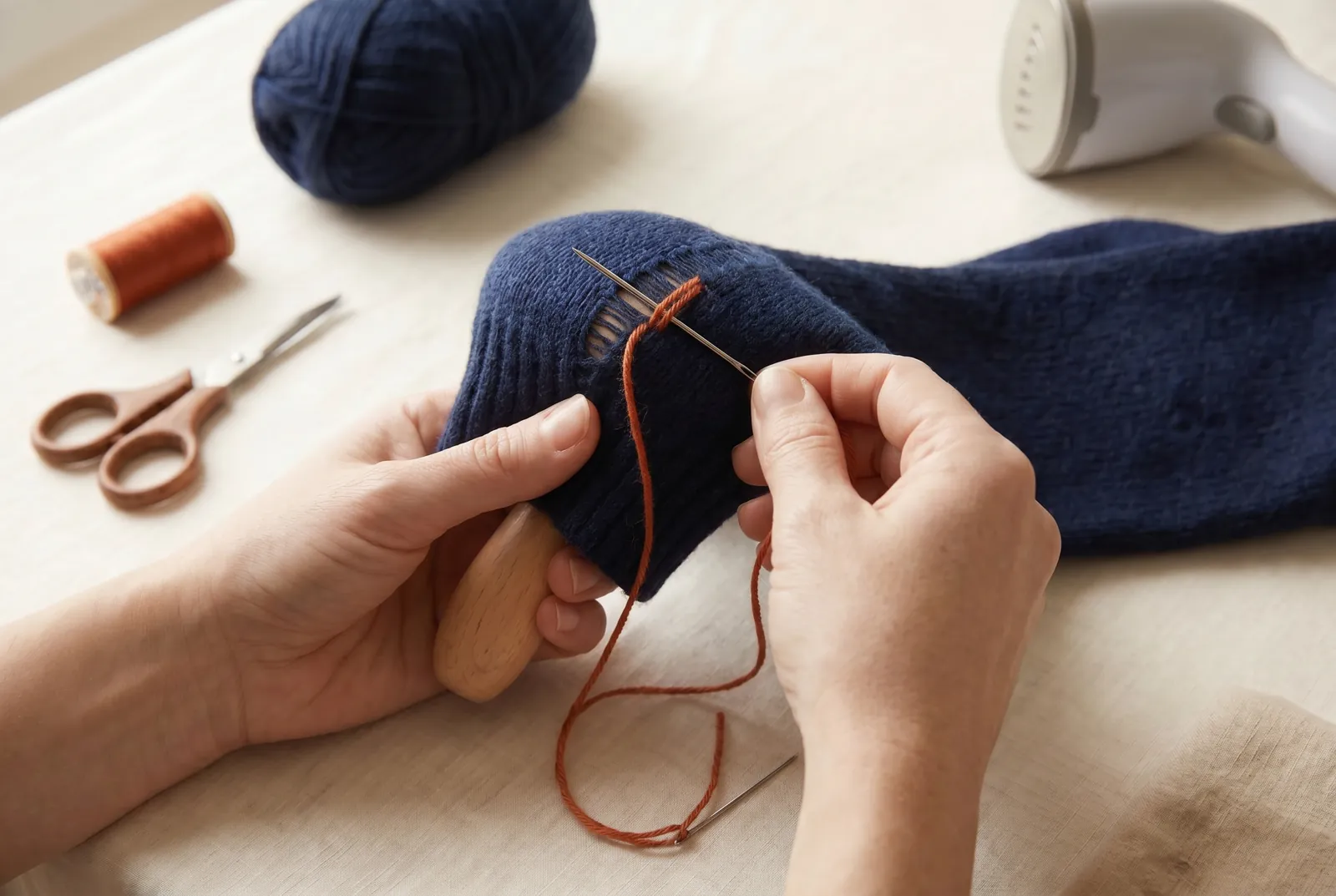
STEP 4/8Begin the duplicate stitch at one edge of the thin area. Bring the needle up through the base of a knit loop (the small V of a stitch), pass it under the two arms of the loop directly above, then return the needle through the base where it first came up. Draw the yarn through so it lies flat over the old loop, not pulled tight, so the mend keeps the knit's stretch.
Step 5
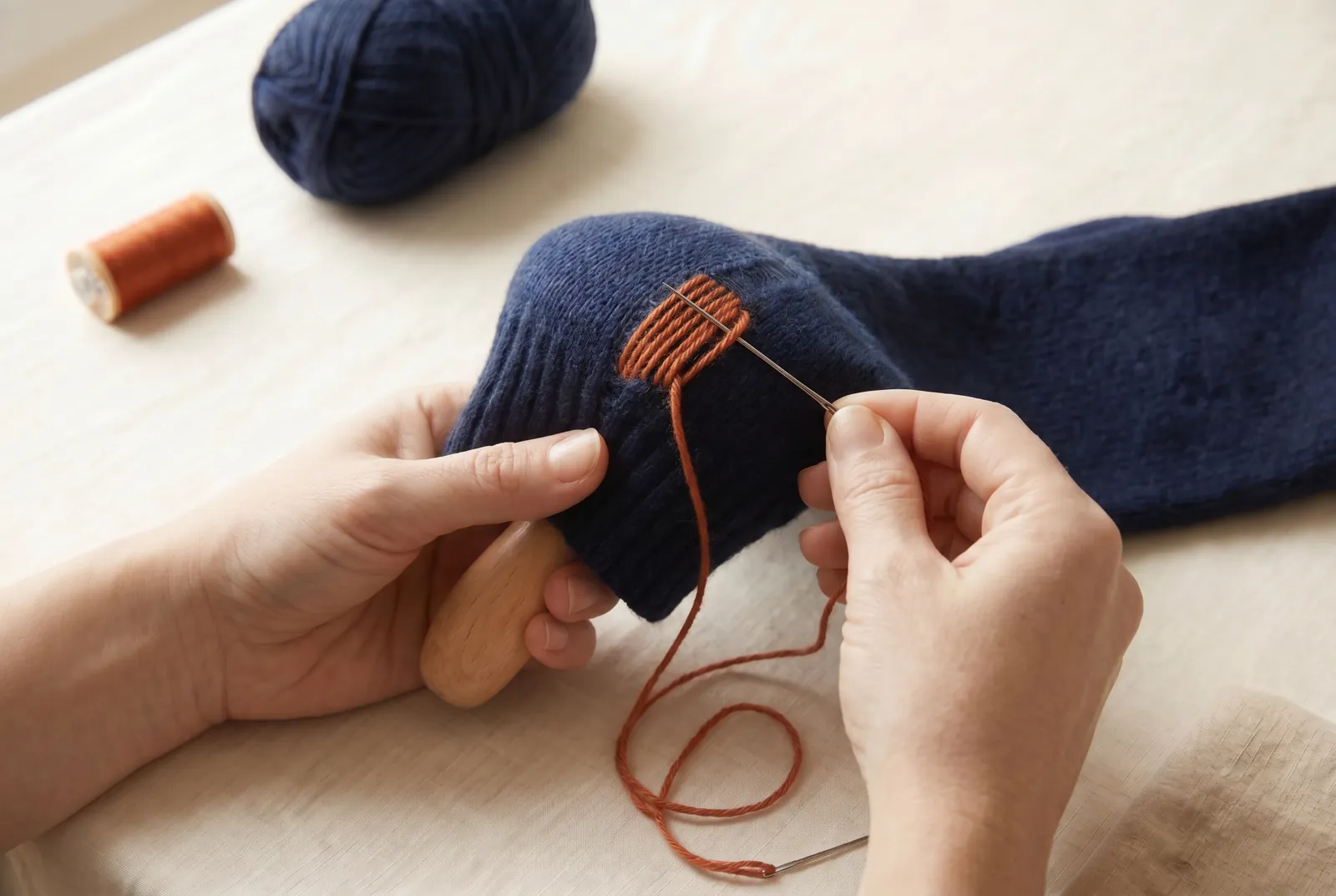
STEP 5/8Repeat the duplicate stitch across the whole thin area, working row by row and following the columns of loops. The new yarn lies over the old and doubles the web without changing the sweater's look or stretch; rows worked over a thin elbow become as heavy as new cloth, and the mend can hardly be seen.
Step 6
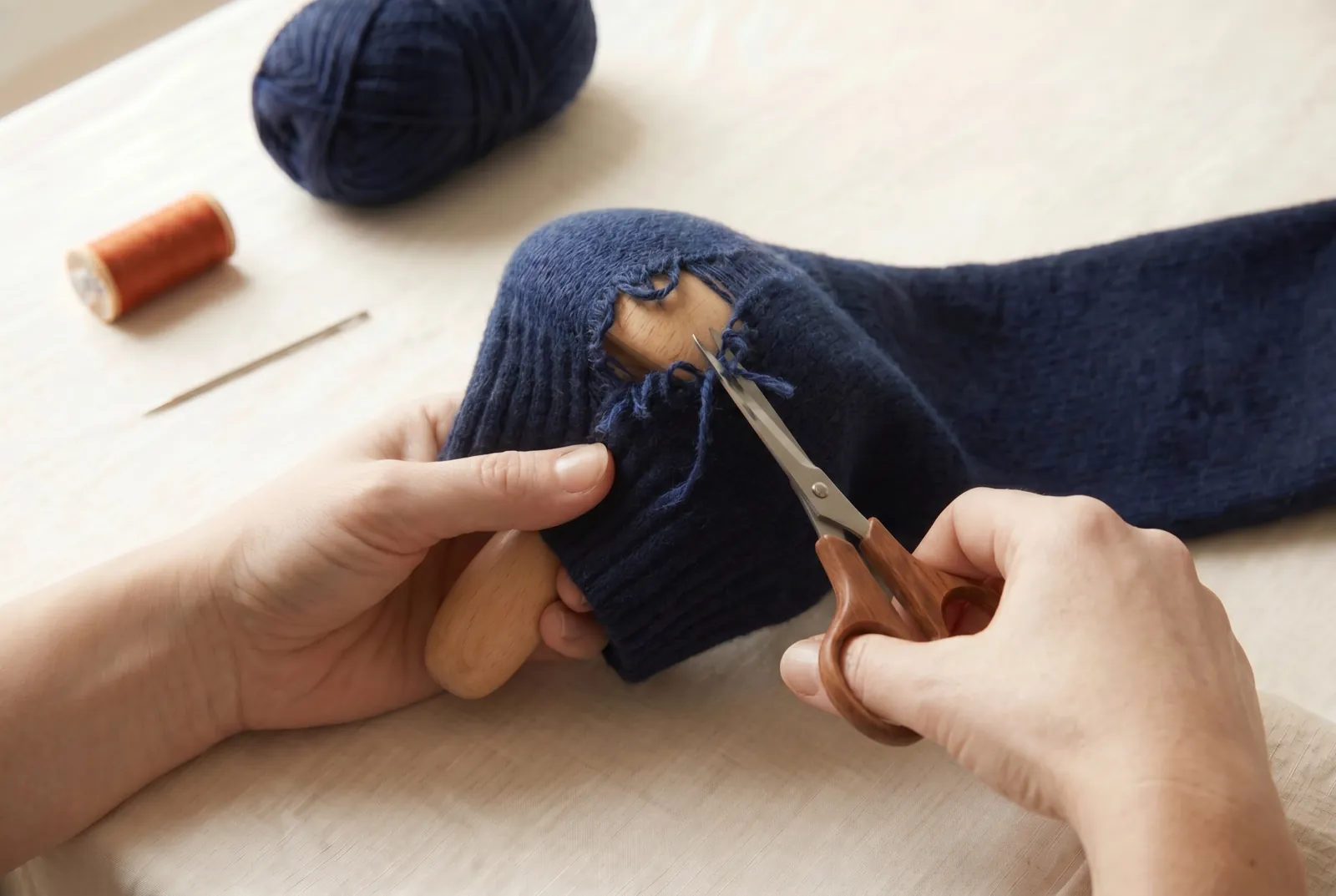
STEP 6/8For an actual hole, set the hole over the darning ball and trim the ragged, frayed ends close with the sharp scissors so you have clean, sound loops to weave from.
Step 7
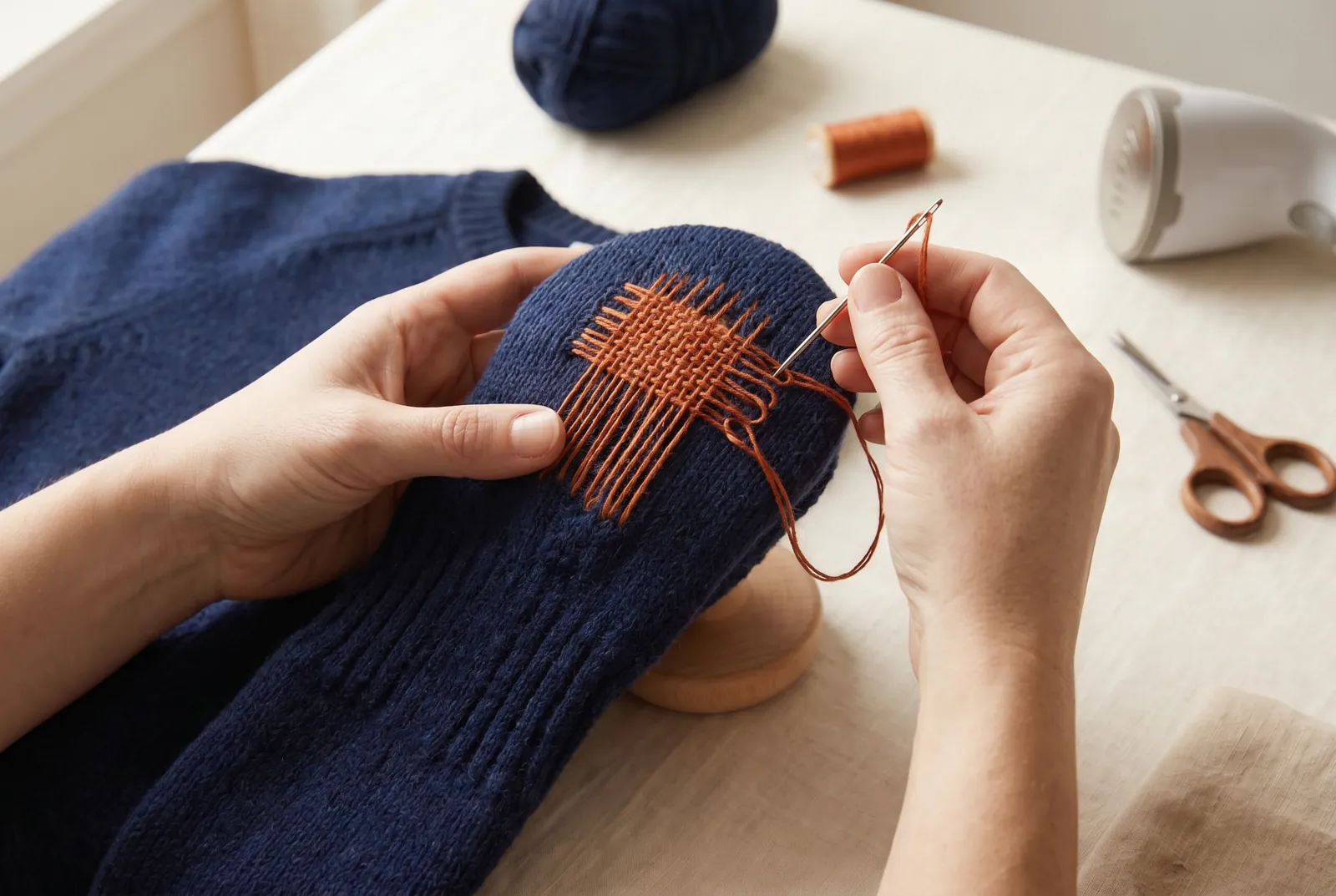
STEP 7/8Fill the hole in two passes. First lay lengthwise strands across the gap from sound web to sound web, following the wales; then weave crosswise through them, over one and under one, catching the sound loops at the edges so they cannot run down. Leave a small loop at every turn so the darn keeps the stretch of the knit.
Step 8
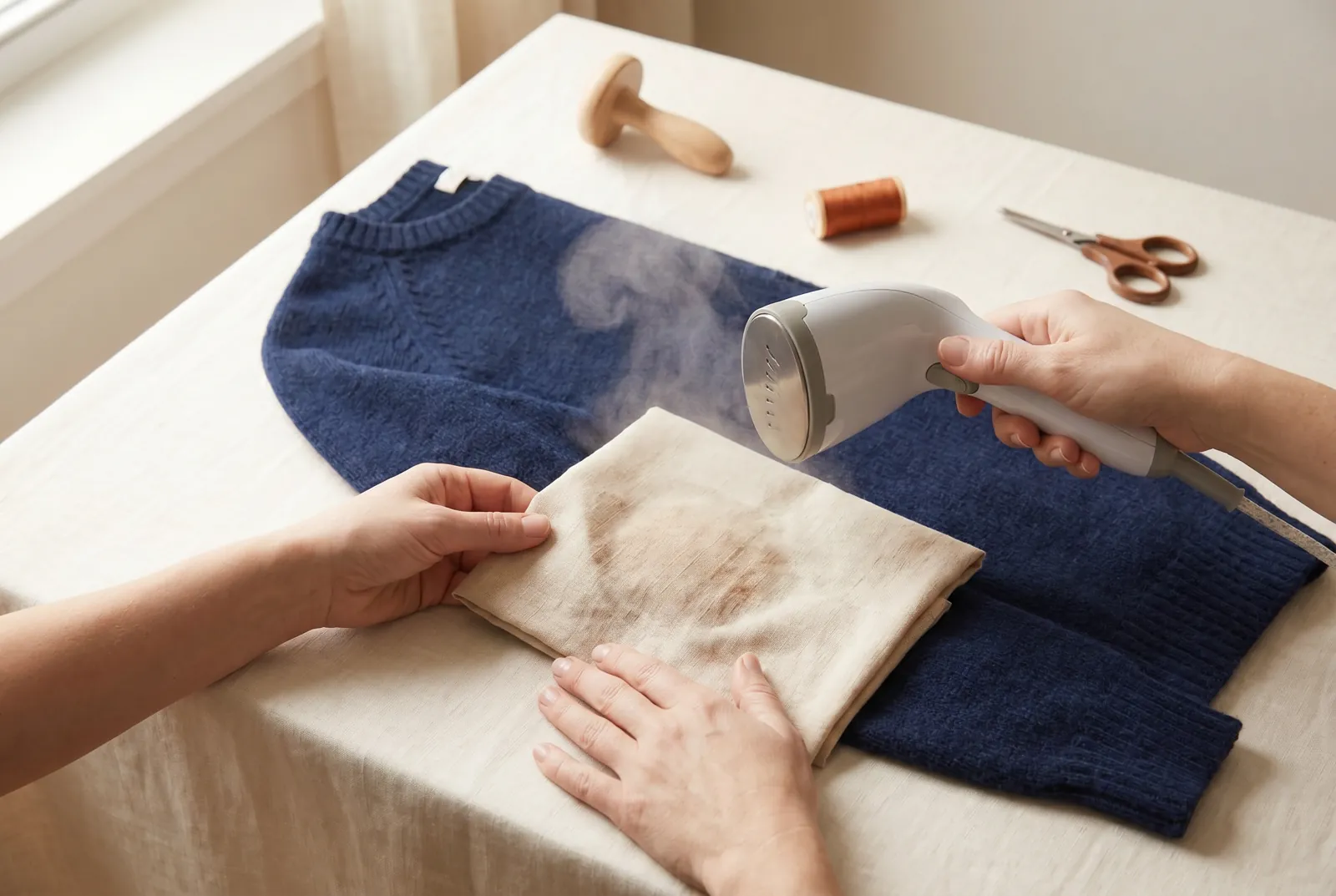
STEP 8/8When the mend is done, lay the damp pressing cloth over it and steam it lightly, holding the iron above the cloth with no downward pressure. A hot iron set down hard flattens the web and makes the darn both visible and hard.