Hand-Sewing Fundamentals · piece Nº 49 · 42 min
Match a needle to your thread, and fasten off a snap
Before your first stitch, the needle and thread have to suit each other and the cloth. This lesson shows how to pick a needle by its type and number, match it to the right thread, spot a needle that would damage your fabric, and fasten off a snap so no stitch shows.
The seam · 7 steps
Step 1
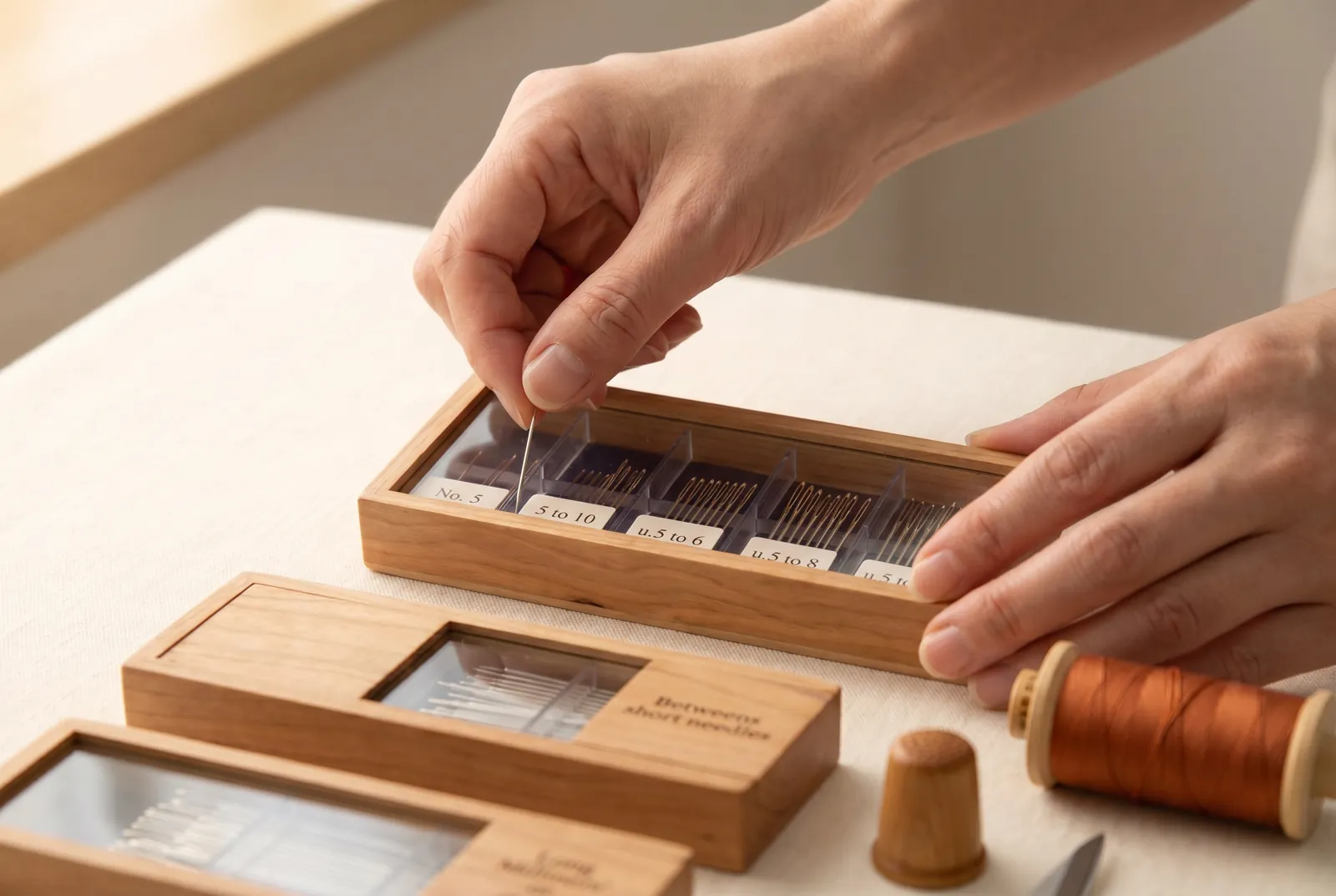
STEP 1/7Pick the needle to fit the job. Sharps are medium-length needles for plain hand sewing; betweens are shorter, for fine close work pushed with a thimble; milliners' or straw needles are long, for basting and gathering, where many stitches ride on the needle at once. For most mending, reach for a sharp.
Step 2
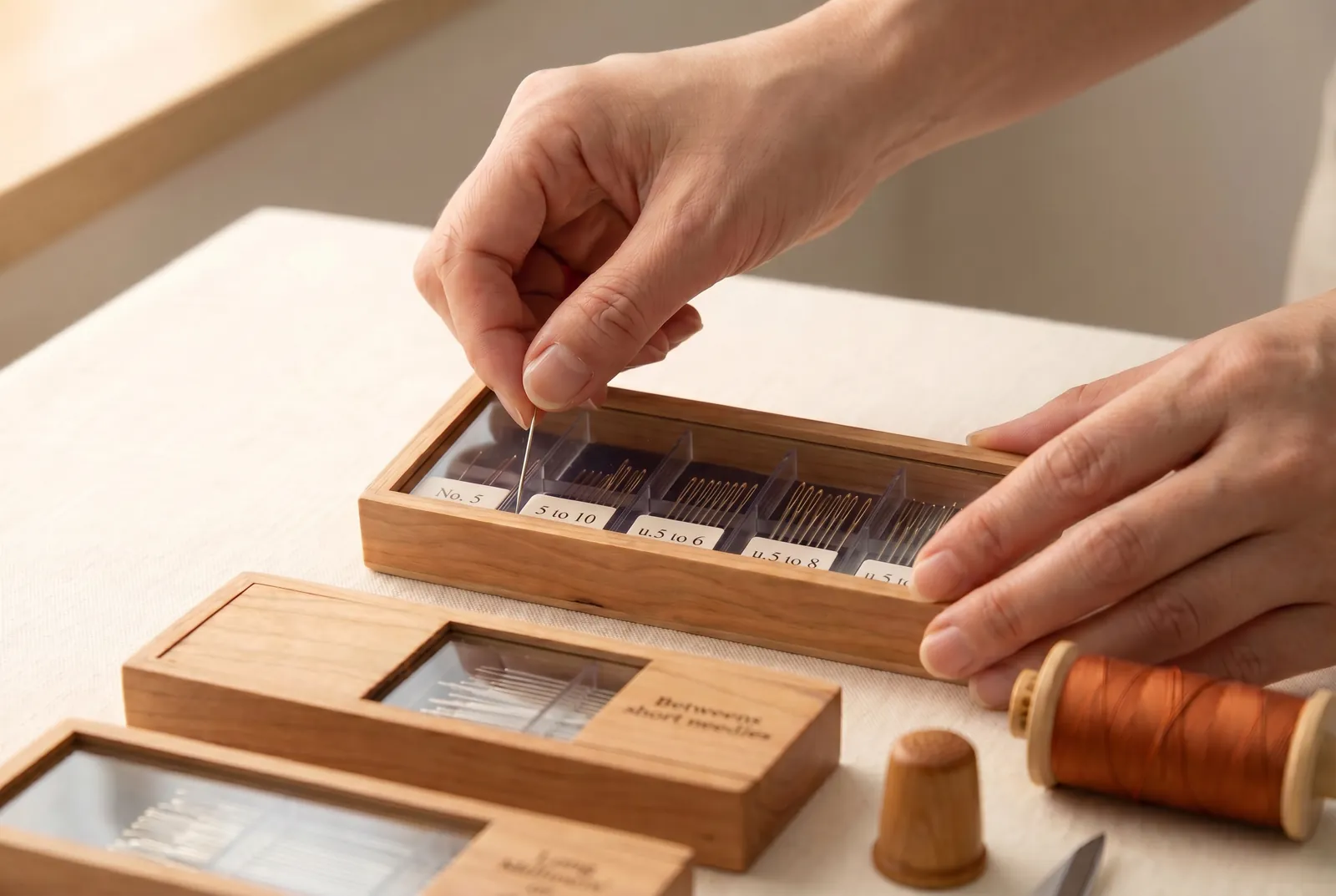
STEP 2/7Read the needle's number from its packet. The higher the number, the finer the needle: a No. 5 sharp is coarse, a No. 10 is fine. Keep an assortment of sharps from No. 5 to No. 10 so you can match the needle to the cloth.
Step 3
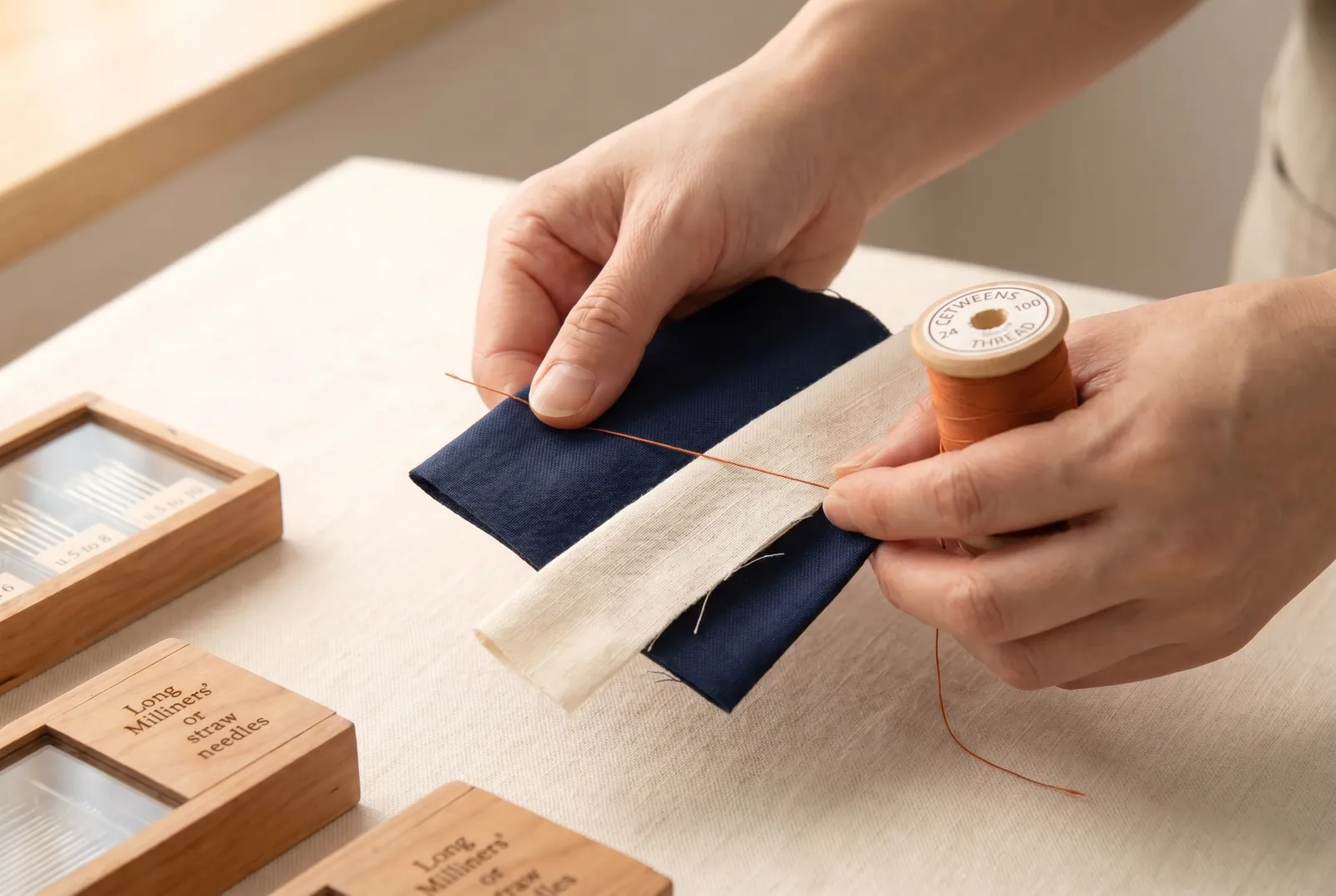
STEP 3/7Choose the thread by the cloth you are sewing. Use No. 24 to 40 cotton for heavy work, buttons, and coarse goods; No. 50 to 70 for ordinary sewing on muslin and calico; and No. 80 to 100 for fine muslins and cambrics.
Step 4
STEP 4/7On woolen goods, use silk or wool thread rather than cotton. It gives with the cloth as the wool moves, where hard cotton would cut it.
Step 5
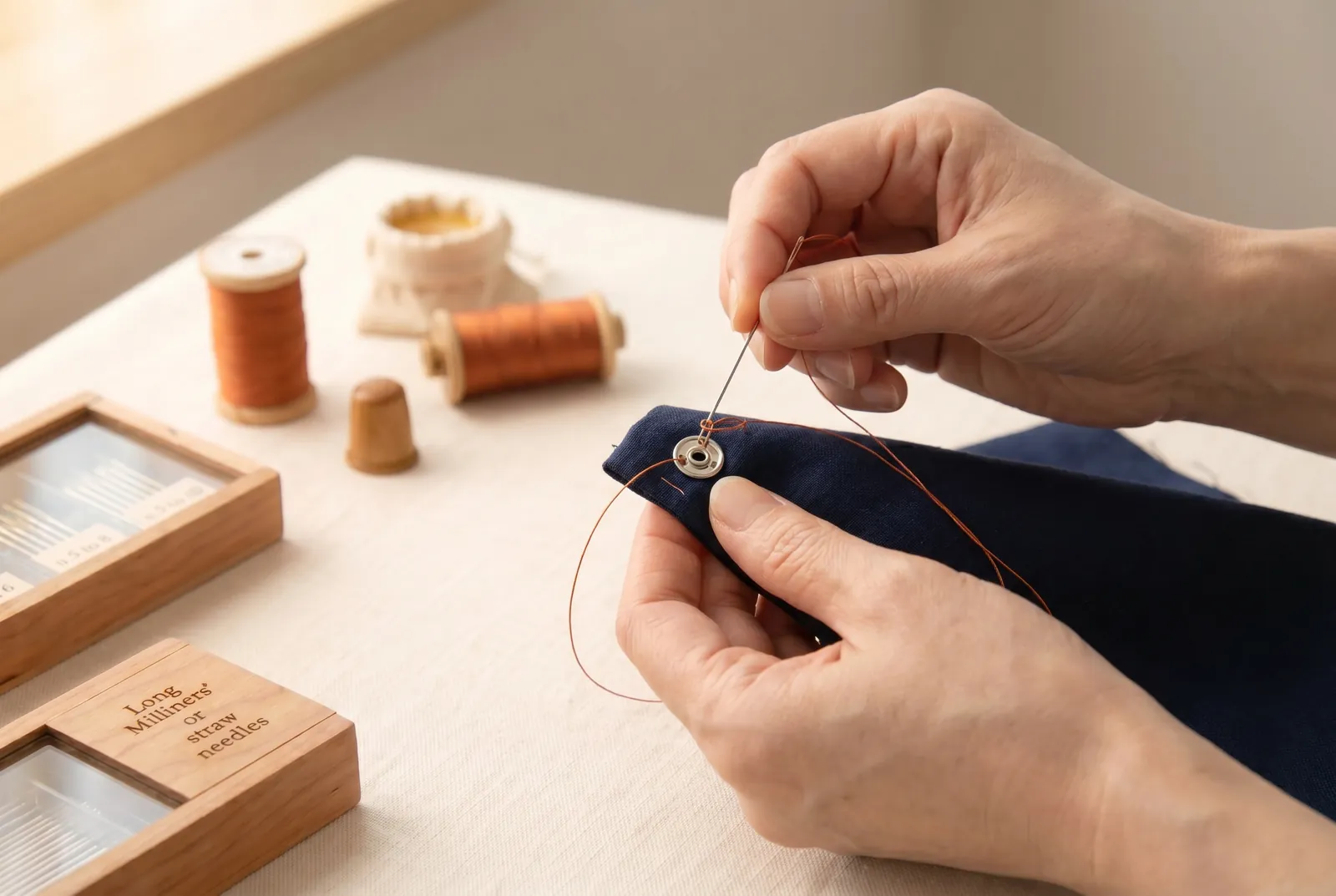
STEP 5/7Pair the needle to the thread: pick one a little larger than the thread, so it opens the way and the thread follows through the cloth without chafing. A needle too fine frays the thread; one too coarse leaves holes in the cloth. With No. 60 or 70 cotton, a No. 8 or 9 needle serves.
Step 6
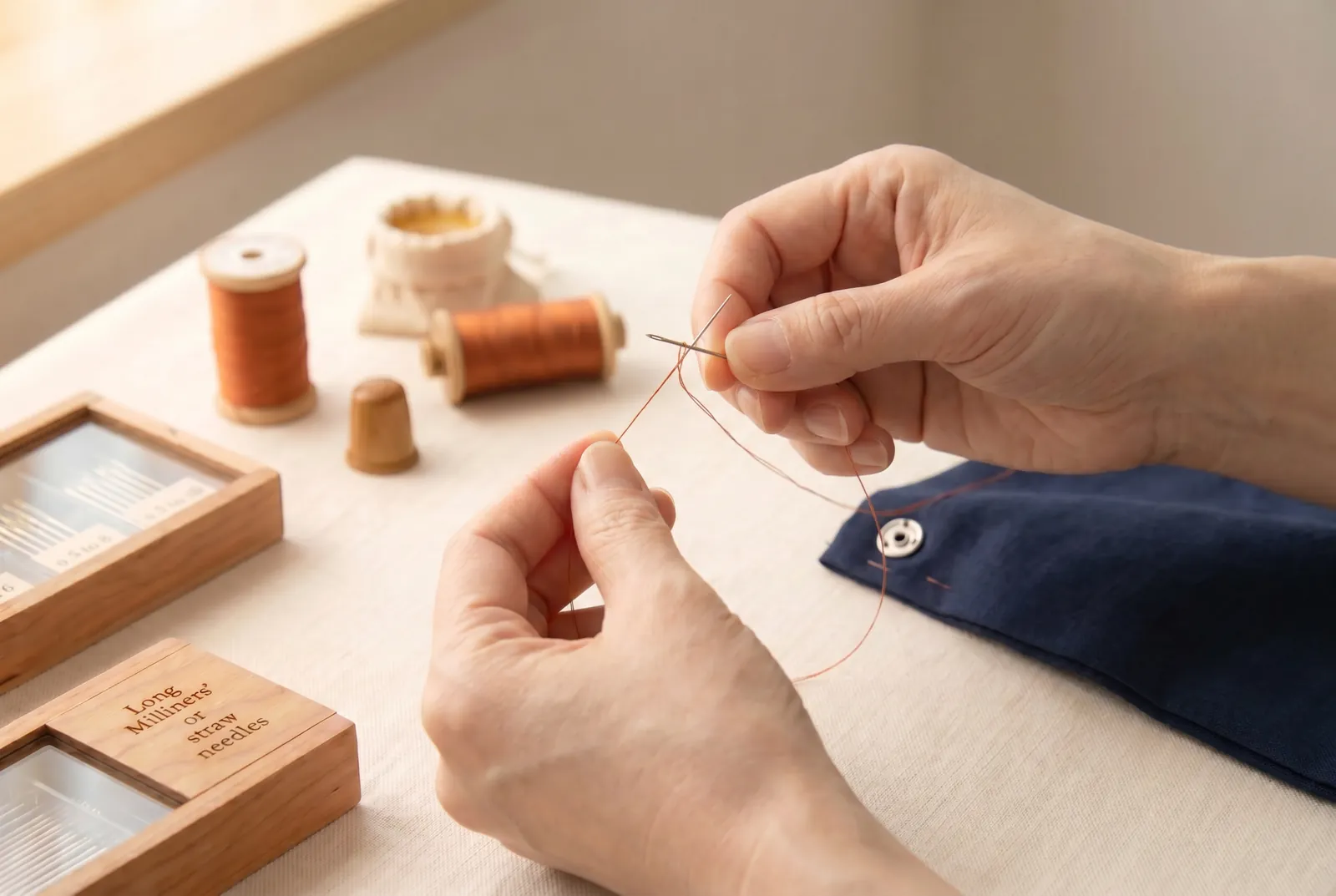
STEP 6/7Before you sew, draw the needle between your fingers and look at the point. A bent or blunted needle cuts the goods along the whole seam, so set it aside and take a straight, sharp one.
Step 7
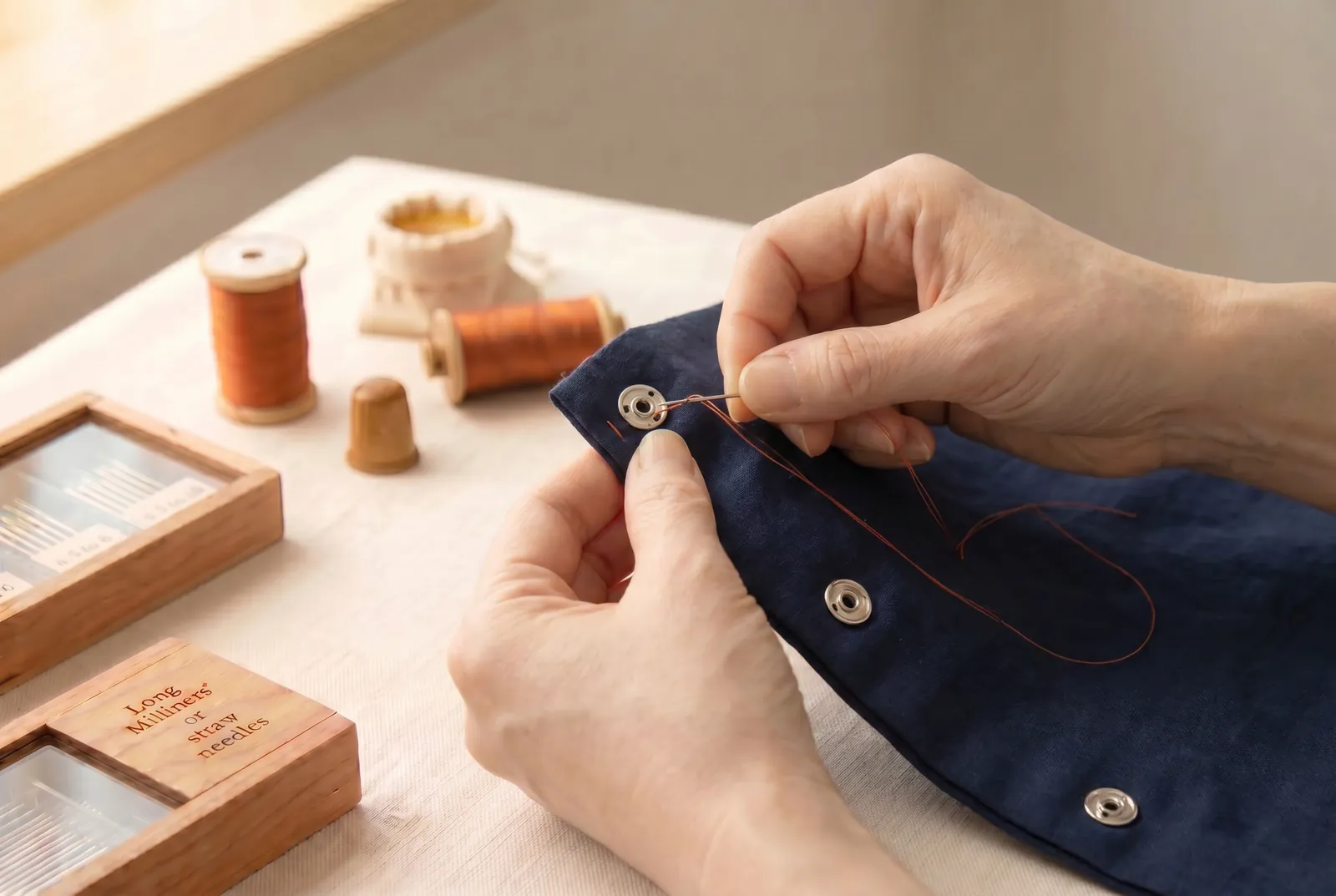
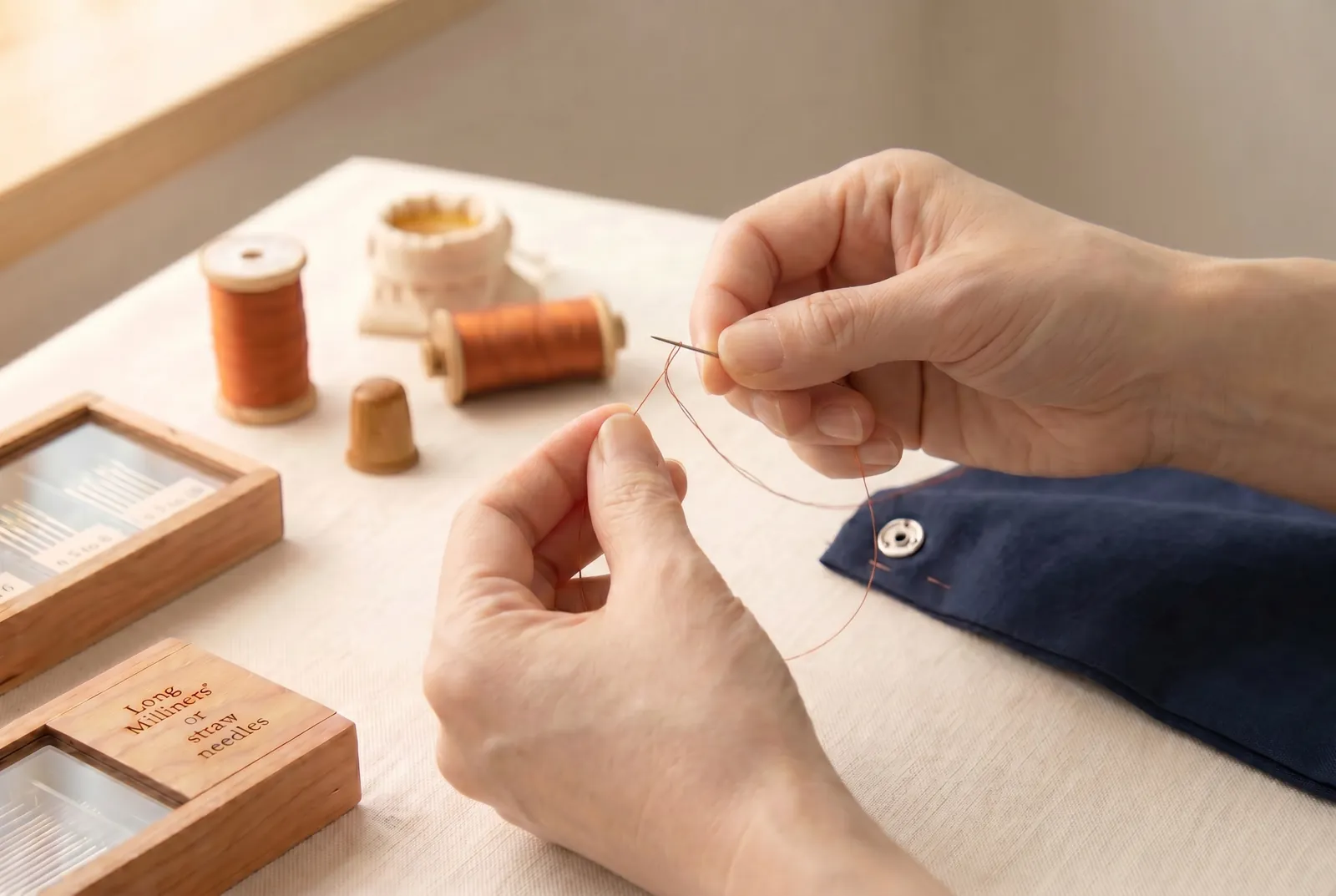
STEP 7/7The end of the thread matters as much as the start. When you sew a snap to a placket, space the snaps 2.5 to 4 cm (1 to 1.5 in) apart along the opening, and fasten off each one with a few small stitches hidden beneath the snap, where they will not show.